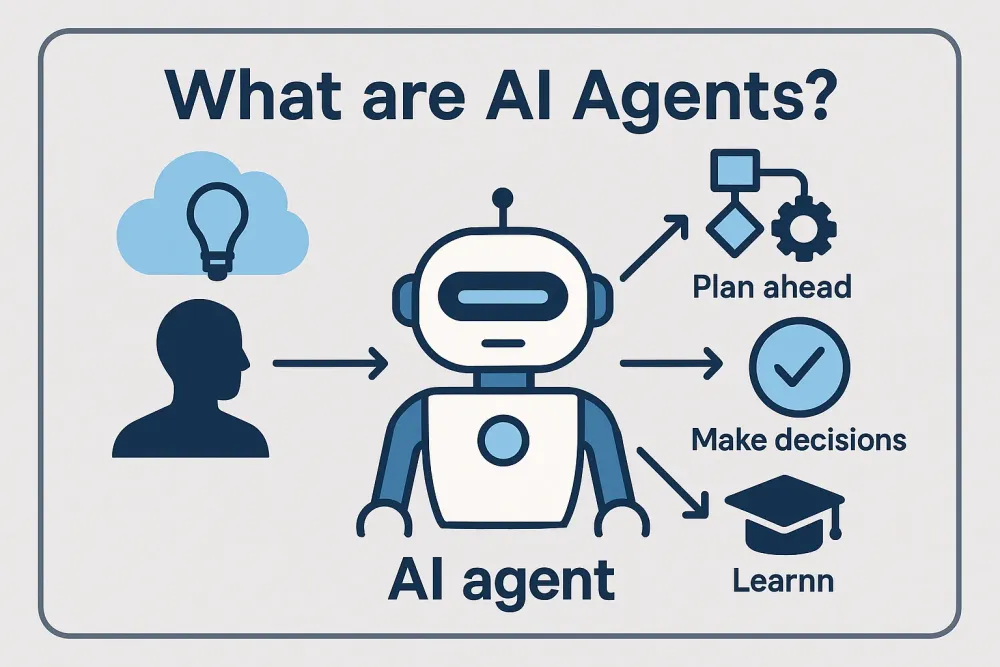
An AI agent is an autonomous system driven by an LLM that can perceive its environment, make independent decisions, and execute tasks using digital tools without step-by-step human intervention.
How They Differ from Chatbots
- Chatbots: Operates entirely on a back-and-forth conversation. It answers your prompt, stops, and waits for your next input. It cannot take actions outside the chat box.
- AI Agents: You give it a final destination. The agent builds its own checklist, writes its own internal prompts, opens external apps, evaluates its own progress, and runs continuously until the job is completed.
CHATBOT FLOW:
[User Prompt] ──> [Chatbot Response] ──> (Waits for next human command)
AI AGENT FLOW:
[User Goal] ──> [Agent Plans Steps] ──> [Agent Executes Tool] ──> [Agent Checks Work] ──> [Final Goal Met]
Real-World Uses
- Research Agents: Scrapes dozens of web pages, compiles data into spreadsheets, updates market numbers, and emails a finished PDF report to a user.
- Coding Agents: Inspects a software repository, locates a reported bug, writes a patch, tests the code, and submits a pull request automatically.
How Businesses Use AI Agents
Businesses use agents to handle complex workflows. For example, an HR Agent can automatically receive a job application, verify credentials against database records, administer a screening test, evaluate the results, and automatically schedule an interview in a manager’s calendar if the applicant passes.
Future Trends
We are moving away from simple text boxes toward invisible background automation. In the coming years, individuals will manage ecosystems of personalized agents that seamlessly handle calendar scheduling, financial portfolios, and digital purchasing autonomously.